Latest posts
-
Epithalon and MOTS-c Longevity Stack: What the Research Shows About Combining These Two Aging-Biology Peptides

Epithalon and MOTS-c Longevity Stack: What the Research Shows About Combining These Two Aging-Biology Peptides Longevity research has increasingly moved toward a multi-target framework — the recognition that biological aging is not driven by a single mechanism but by the convergence of several distinct processes: telomere shortening, mitochondrial dysfunction, epigenetic drift, cellular senescence, and chronic…
-
Semax and Selank Stack: What Research Reveals About Combining These Soviet-Era Neuropeptides
Semax and Selank Stack: What Research Reveals About Combining These Soviet-Era Neuropeptides Among the neuropeptides that have generated sustained scientific interest over the past four decades, Semax and Selank occupy a distinctive position. Both were developed at the Institute of Molecular Genetics of the Russian Academy of Sciences. Both have been the subjects of registered…
-
Epithalon Research: Telomere Extension, Pineal Biology, and What 40+ Years of Preclinical Literature Actually Shows
Epithalon Research: Telomere Extension, Pineal Biology, and What 40+ Years of Preclinical Literature Actually Shows In the field of peptide research, few compounds carry a research history as long — or as geographically concentrated — as Epithalon. Also spelled Epitalon, this synthetic tetrapeptide has been the subject of continuous scientific investigation since the late 1970s,…
-
Peptide Microdosing Research: What the Concept Means in Scientific Contexts and What the Evidence Shows
Peptide microdosing refers to sub-standard dose approaches with proposed rationales including receptor desensitization avoidance and pulsatility optimization. This research overview clarifies the distinction from the formal pharmacological definition of microdosing, examines what published dose-response data show, and distinguishes between theoretical rationales and evidence-supported claims.
-
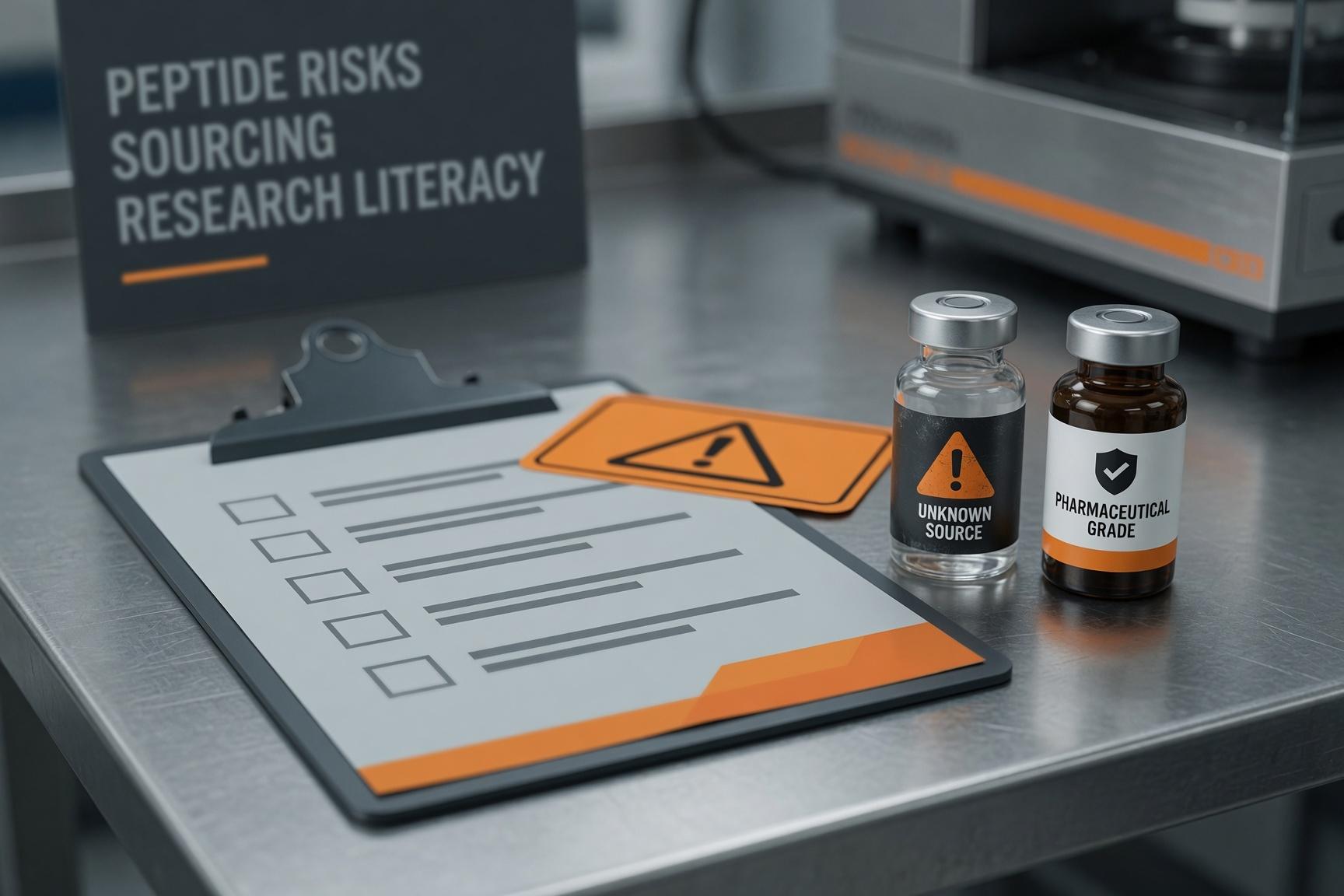
Understanding Peptide Sourcing for Research: Purity Standards, Certificates of Analysis, and What to Look For
The quality of peptide research depends fundamentally on the quality of the compounds used. This educational overview covers key sourcing standards for research peptides — HPLC purity, mass spectrometry verification, what a meaningful Certificate of Analysis should contain, storage and reconstitution basics, and why endotoxin testing matters for in vivo research.
-
Weight Loss Peptide Stack Research: Semaglutide, Tirzepatide, and the Next Generation of Metabolic Combinations
The progression from semaglutide (GLP-1R) to tirzepatide (GLP-1R/GIPR) to retatrutide (GLP-1R/GIPR/GCGR) represents one of pharmacology’s most productive recent research trajectories. This article examines the published evidence at each level of receptor combination, what each added target contributed to metabolic outcomes, and the key research questions the field is now investigating.
-
GH Secretagogue Stack Research: CJC-1295 and Ipamorelin as a Dual-Mechanism Protocol
The CJC-1295 and ipamorelin combination is one of the most referenced dual-mechanism GH secretagogue protocols in research literature. This article examines the published pharmacological basis for GHRH and GHRP pathway synergy, why this specific pairing is commonly studied, and what the peer-reviewed literature does and does not establish about the combination.
-
BPC-157 and TB-500 Stack: What the Research Says About Combining These Two Recovery Peptides
The combination of BPC-157 and TB-500 is one of the most discussed peptide stacks in tissue repair research. This article examines the mechanistic rationale based on each compound’s published individual biology — BPC-157’s angiogenic and growth factor effects alongside TB-500’s cell migration mechanisms — and clearly distinguishes what the peer-reviewed literature does and does not…
-
DSIP: Research on Delta Sleep-Inducing Peptide and Its Role in Sleep and Stress Biology
Delta sleep-inducing peptide (DSIP) is a nonapeptide first isolated from rabbit cerebral venous blood in 1977, initially characterized for its ability to increase slow-wave sleep in animals. This research overview covers its proposed mechanisms, preclinical findings across sleep, stress, and pain models, and the limited human clinical data available in the published literature.
-
Selank: Research on the Tuftsin-Based Anxiolytic Peptide and Its GABAergic and Neurotrophin Mechanisms
Selank is a synthetic heptapeptide derived from tuftsin, registered in Russia as an anxiolytic and adaptogen. Its proposed mechanisms include GABAergic modulation, enkephalin stabilization, and BDNF upregulation. This research overview covers its structural origin, preclinical findings in anxiety models, and clinical registration data from Russian trials.