Latest posts
-
Gut Health, Neurocosmetics, and Longevity Science: What the Mind-Body-Skin Connection Means for Your Treatment Menu

The fastest-moving conversation at beauty and wellness conferences in 2026 isn’t about a new device or a new ingredient. It’s about the gut-skin axis, neurocosmetics, and longevity science — and what they mean for estheticians and spa owners ready to evolve their menus.
-
What “Science-Backed Skincare” Actually Means in 2026 — And Where Peptide Research Fits
Be+Well’s biggest education track this year is science-backed skincare. Here’s what that phrase actually means at the biological level — and the research compounds estheticians and med spa practitioners are integrating into their protocols.
-
Be+Well Las Vegas 2026 Is Next Week — Here’s the Science Behind This Year’s Biggest Skin and Longevity Trends
Be+Well Las Vegas lands June 27-29 at the Convention Center. This year’s conference doubles down on science-backed skincare, longevity science, and holistic wellness. Here’s the research behind the trends dominating the show floor.
-
Ozempic Face: What Causes It and What Skin and Collagen Research Currently Shows
Rapid fat loss from GLP-1 medications can leave facial skin hollow and lax. Here’s the biology behind “Ozempic face” — and what collagen and skin elasticity research currently shows about these changes.
-
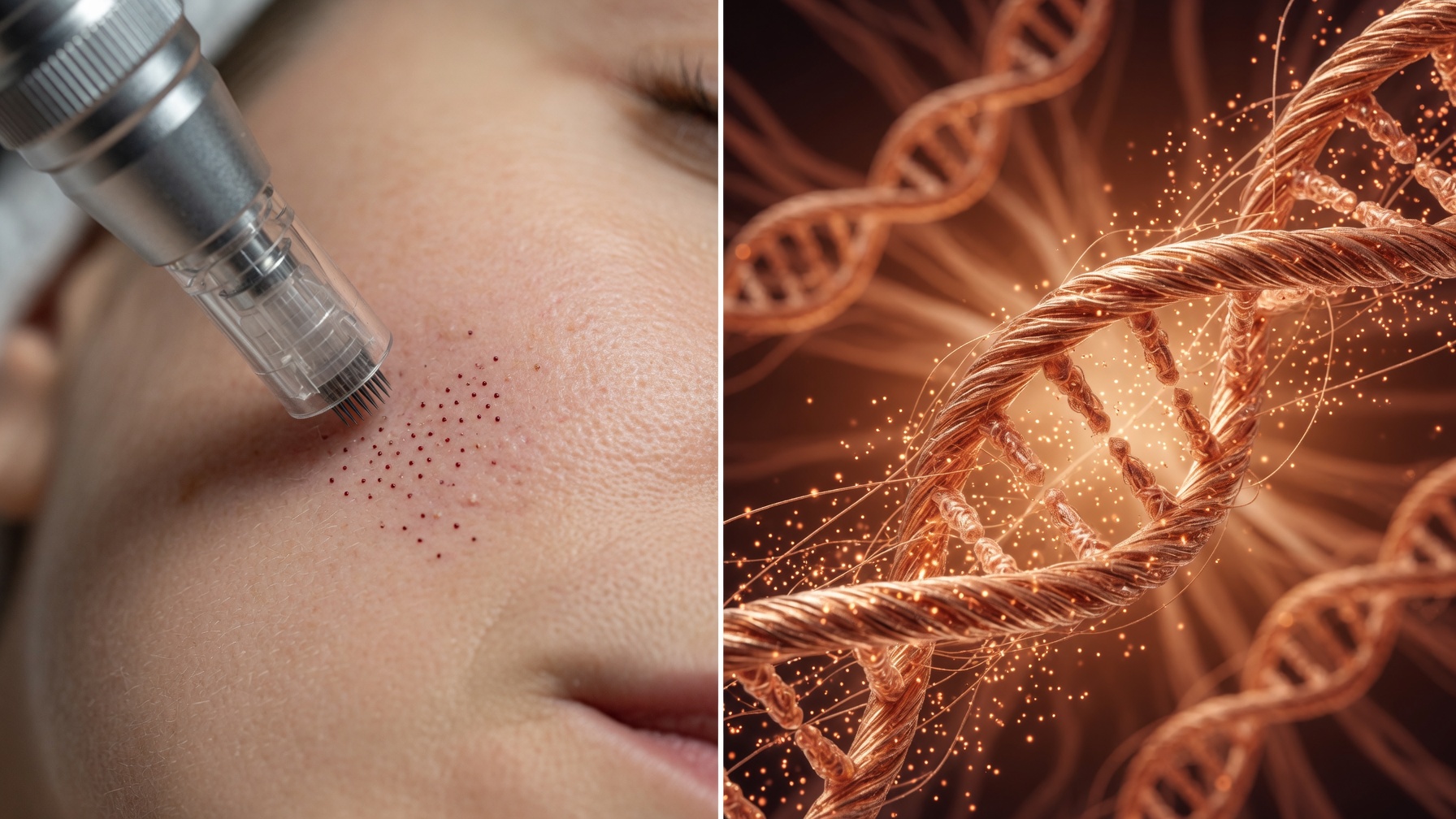
Why GHK-Cu Is the Highest-Value Add-On Your Micro-Needling Menu Doesn’t Have Yet
The research on GHK-Cu and collagen signaling makes it the most scientifically grounded add-on to micro-needling. Here’s why — and how the two-tier service model can attract premium clients and differentiate your practice.
-
GHK-Cu and Micro-Needling: What the Collagen Research Actually Shows About This Combination
Micro-needling disrupts skin cells externally to trigger collagen receptor signaling. Research on GHK-Cu suggests this copper tripeptide interacts with those exact downstream pathways — here’s what the science actually shows.
-
GHK-Cu and BPC-157 Stack: Collagen Synthesis, Skin Repair, and Anti-Aging Research
GHK-Cu and BPC-157 Stack: Collagen Synthesis, Skin Repair, and Anti-Aging Research The biology of skin aging involves the convergence of multiple processes: declining collagen synthesis and structural matrix integrity, reduced vascular density and impaired microcirculation, chronic low-grade inflammation, and the accumulation of oxidative damage across cellular compartments. Effective research into anti-aging skin biology increasingly recognizes…
-
Epithalon and MOTS-c Longevity Stack: What the Research Shows About Combining These Two Aging-Biology Peptides
Epithalon and MOTS-c Longevity Stack: What the Research Shows About Combining These Two Aging-Biology Peptides Longevity research has increasingly moved toward a multi-target framework — the recognition that biological aging is not driven by a single mechanism but by the convergence of several distinct processes: telomere shortening, mitochondrial dysfunction, epigenetic drift, cellular senescence, and chronic…
-
Epithalon Research: Telomere Extension, Pineal Biology, and What 40+ Years of Preclinical Literature Actually Shows
Epithalon Research: Telomere Extension, Pineal Biology, and What 40+ Years of Preclinical Literature Actually Shows In the field of peptide research, few compounds carry a research history as long — or as geographically concentrated — as Epithalon. Also spelled Epitalon, this synthetic tetrapeptide has been the subject of continuous scientific investigation since the late 1970s,…
-
SS-31: Mitochondria-Targeted Peptide Research and What the Data Show About Cardiolipin and Cellular Energy
SS-31 (Elamipretide) is a mitochondria-targeted tetrapeptide designed to protect cardiolipin — a critical inner mitochondrial membrane phospholipid — from oxidative damage. This research overview covers its unique design rationale, cardiolipin-based mechanism, preclinical findings across cardiac and renal models, and human clinical trial data in heart failure and Barth syndrome.